What is Tree Pruning?
Tree pruning is the practice of cutting away specific branches, limbs, or stems from a tree to improve its health, safety, or appearance. Unlike trimming, which often refers to shaping hedges or shrubs, pruning targets individual parts of a tree for a clear purpose. When done right, pruning helps your trees grow stronger, live longer, and stay safe for your property and family.
Many homeowners across the United States wonder if they need to prune their trees or if they can skip this task. The truth is that regular pruning protects your investment in your landscape and prevents costly damage down the road. This guide explains what tree pruning involves, why it matters, and how to know when your trees need attention.
Key Takeaways
- Tree pruning removes specific branches to improve tree health, safety, and structure
- Proper pruning prevents disease, reduces storm damage, and extends tree life
- Different pruning methods serve different purposes, from cleaning to thinning
- Timing matters: pruning needs vary, though many trees benefit from dormant season care
- Large trees and heavy branches require professional equipment and training
- Regular pruning saves money by preventing emergency tree removal
The Purpose and Benefits of Tree Pruning
Tree pruning serves several important functions for your property. The main goal is to remove branches that could cause problems while encouraging healthy growth patterns. When you prune a tree, you help it direct energy to the strongest, most productive branches.
Pruning improves safety by removing dead or weak branches that could fall during storms. According to the International Society of Arboriculture, proper pruning reduces the risk of branch failure by up to 90%. This matters especially in residential areas where falling branches can damage homes, cars, or injure people.
Health benefits include better air circulation through the canopy, which reduces fungal diseases. Pruning also removes diseased or infested branches before problems spread to healthy parts of the tree. Trees that receive regular pruning live longer and require less intensive care over time.
How Pruning Affects Tree Growth
When you remove a branch, the tree responds by redirecting growth hormones and nutrients. This process helps the tree develop a stronger structure and denser foliage in desired areas. Young trees especially benefit from early pruning, which shapes their growth for decades to come.
Pruning cuts trigger the tree to seal the wound with specialized tissue called callus. Proper cuts heal faster and reduce the risk of infection. Poor cuts or torn branches leave the tree vulnerable to pests and disease. This is why the technique matters as much as the decision to prune.
Common Types of Tree Pruning
Different pruning methods achieve different results. Understanding these types helps you communicate with tree service professionals and make informed decisions about your trees.
Crown cleaning removes dead, dying, diseased, or weakly attached branches from the tree canopy. This is the most common type of pruning for mature trees. It improves appearance and reduces hazards without changing the tree's natural shape.
Crown thinning selectively removes branches to increase light penetration and air movement through the canopy. This method reduces weight on heavy limbs and decreases wind resistance, which helps prevent storm damage. Thinning should never remove more than 25% of the living crown.
Crown raising removes lower branches to provide clearance for buildings, vehicles, pedestrians, or views. This technique is common along streets and driveways. However, removing too many lower branches can stress the tree and affect its stability.
Crown reduction decreases the height or spread of a tree. This method is useful when trees have outgrown their space or when specific branches threaten structures. Reduction cuts should be made to lateral branches that are large enough to assume the terminal role.
Structural Pruning for Young Trees
Structural pruning focuses on developing strong branch architecture in young trees. This preventive approach establishes a central leader, removes competing stems, and corrects growth defects early. Trees that receive structural pruning in their first 10 years require less corrective work as they mature.
This type of pruning is an investment in your tree's future. A well-structured young tree grows into a strong, healthy adult that adds value to your property and requires less maintenance over its lifetime.
When and How Often to Prune Trees
Timing affects how well trees respond to pruning. Most trees benefit from pruning during their dormant season, which is late fall through early spring in most parts of the United States. Dormant pruning causes less stress and reduces the risk of disease transmission.
Some exceptions exist. Spring-flowering trees like dogwood and magnolia should be pruned immediately after they bloom. Oak trees in areas with oak wilt should only be pruned during winter when the beetles that spread this disease are inactive.
Dead, damaged, or hazardous branches can and should be removed any time you notice them. Waiting for the ideal season is not worth the safety risk. However, avoid heavy pruning during the spring growth flush when trees are using stored energy reserves.
Pruning Frequency Guidelines
Young trees benefit from annual inspections and pruning for the first five to seven years. This regular attention shapes their structure and corrects problems early when fixes are simple.
Mature trees typically need pruning every three to five years, depending on the species and location. Fast-growing trees like willows and poplars may need more frequent attention. Slow-growing trees like oaks can go longer between pruning sessions.
After severe weather, inspect your trees for damage. Broken branches, split limbs, and hanging debris need immediate attention to prevent further damage and safety hazards.
Professional Pruning vs. DIY
Homeowners can safely prune small branches that they can reach from the ground with hand tools. As a general rule, if you can reach it with a pole pruner while standing on the ground, you can probably handle it yourself. Always use sharp, clean tools and make proper cuts just outside the branch collar.
However, pruning becomes dangerous quickly when you need ladders, climb trees, work near power lines, or cut branches larger than three inches in diameter. Professional arborists have the training, insurance, and equipment to handle these situations safely.
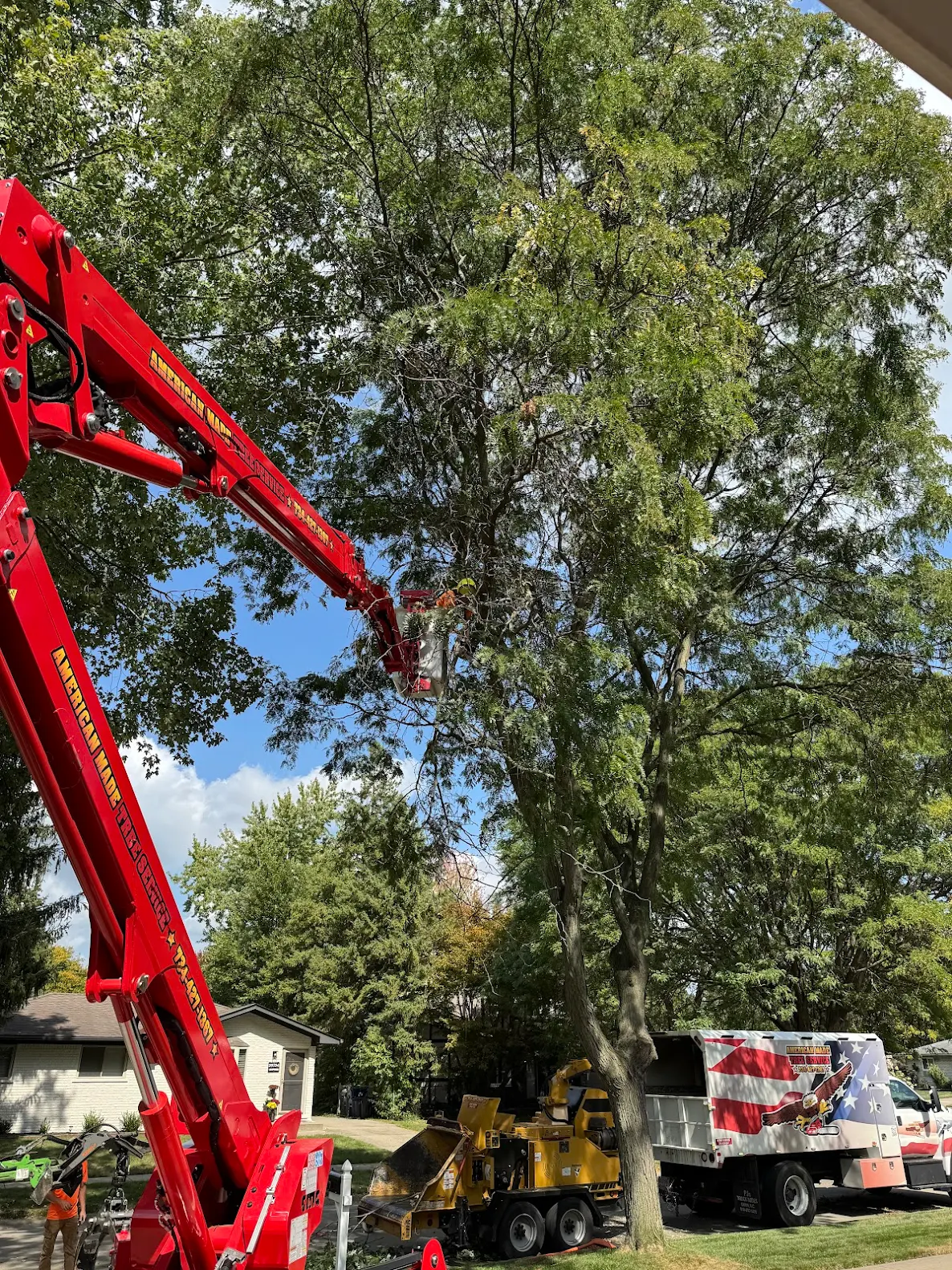
Large trees require specialized equipment like bucket trucks, rigging systems, and professional-grade chainsaws. Attempting this work without proper training leads to injuries every year. The risk simply is not worth the savings.
What Professional Arborists Provide
Certified arborists understand tree biology and recognize species-specific needs. They know which branches to remove and which to keep for optimal tree health. They also spot early signs of disease or pest problems that untrained eyes might miss.
Professional tree services carry liability insurance and workers compensation coverage. This protects you if someone gets hurt or property gets damaged during the work. Hiring an insured professional transfers the risk away from you.
Companies like American Made Tree Services bring years of experience to each job. Professional crews complete work faster and safer than DIY attempts, and they clean up thoroughly when finished.
FAQ Section
What is the difference between tree pruning and tree trimming?
Tree pruning targets specific branches for health, safety, or structural reasons. Trimming generally refers to maintaining the shape and size of shrubs and hedges. Pruning requires more knowledge of tree biology and involves selective cuts based on the tree's needs.
How much of a tree can be safely pruned at once?
You should never remove more than 25% of a tree's living crown in a single session. Removing too much foliage stresses the tree and can cause long-term damage or death. Severe pruning problems may require multiple sessions spread over several years.
Can pruning kill a tree?
Yes, improper pruning can kill a tree. Topping, removing too many branches at once, or making improper cuts can fatally stress a tree. This is why technique and restraint matter. A healthy tree can recover from moderate, proper pruning without problems.
Why are my tree branches dying after pruning?
If branches die after pruning, the cuts may have been made incorrectly, too much foliage was removed, or the tree was pruned at the wrong time. Disease organisms can also enter through fresh cuts if tools were not clean. Contact a certified arborist to assess the damage.
Do all tree species need pruning?
Most trees benefit from some pruning throughout their lives, but needs vary by species. Some trees like birches and maples naturally develop good structure and need minimal pruning. Others, like Bradford pears, have weak structure and require regular attention. Your arborist can recommend a schedule based on your specific trees.
Will pruning make my tree grow back thicker?
Pruning stimulates new growth near the cuts, which can make the canopy appear denser in those areas. However, this response depends on the tree species, cut location, and pruning method. Proper thinning reduces density, while heading cuts typically increase it.
Protect Your Trees with Professional Care
Tree pruning is a valuable practice that keeps your landscape healthy, safe, and beautiful. Understanding what pruning involves helps you make better decisions about your trees and recognize when professional help is needed. Regular pruning prevents problems, extends tree life, and protects your property investment.
If your trees need attention or you are not sure what they require, getting a professional assessment is the smart choice. Waiting until branches fail or disease spreads costs more in the long run.
American Made Tree Services provides expert tree pruning and tree trimming services . Our team uses proper techniques and professional equipment to care for your trees the right way. Contact us today for a free consultation and keep your trees healthy for years to come.