Who Is Responsible for Fallen Tree Removal?
A fallen tree can turn a normal day into a stressful one fast. Maybe a storm rolled through overnight. Maybe an old tree finally gave out. Now there is a tree on your lawn, driveway, fence, or even your house. The first question most homeowners ask is simple but important, who is responsible for fallen tree removal?
The answer depends on a few key factors like where the tree came from, where it landed, and why it fell. This guide breaks it all down in clear terms so you know what to expect, what to do next, and when to call a professional tree service.
Key Takeaways
- Responsibility usually depends on where the tree was rooted and where it fell
- If a healthy tree falls due to a storm, each property owner handles what is on their land
- Negligence, such as ignoring a dead or unsafe tree, can change who is responsible
- Homeowners insurance often covers damage, but not always full removal
- Trees on public property are typically handled by the city or local agency
The Basic Rule for Fallen Tree Responsibility
In most cases, responsibility for a fallen tree comes down to property lines. The general rule is simple.
If a tree falls and lands on your property, you are usually responsible for removing the portion that is on your land. This applies even if the tree came from a neighbor’s yard, as long as the fall was caused by natural events like wind, ice, or lightning.
The key idea is control. Property owners are responsible for what happens on their own property unless negligence is involved.
When a Tree Falls on Your Own Property
If a tree from your yard falls and stays entirely on your property, responsibility is clear. You handle removal and any repairs.
This includes:
- Trees that fall in your yard
- Trees that block your driveway
- Trees that damage your fence, garage, or home
In these situations, homeowners insurance may help with damage costs. Coverage often depends on:
- Whether the tree caused damage to a covered structure
- The reason the tree fell
- Your policy limits
Insurance may pay for removal if the tree damaged your home or blocked access. If the tree simply fell in the yard without causing damage, removal is often considered maintenance and may not be covered.
If a Neighbor’s Tree Falls on Your Property
This is one of the most common and confusing scenarios.
When It Is Usually Your Responsibility
If a healthy tree falls due to a storm or strong winds and lands on your property, you are typically responsible for removing the portion on your land. This is true even if the tree came from a neighbor’s yard.
Natural events are often referred to as acts of nature. In these cases, each property owner handles their own cleanup.
When a Neighbor May Be Responsible
Responsibility can shift if negligence is involved. If the tree was clearly dead, diseased, or dangerous and the neighbor knew or should have known, they may be liable.
Examples include:
- A dead tree that was never removed
- A visibly rotting or leaning tree
- Written notice or prior complaints about the tree
Documentation matters here. Photos, inspection reports, and written communication can help determine responsibility.
What If Your Tree Falls on a Neighbor’s Property?
The same rules apply in reverse. If your tree falls on a neighbor’s property due to a storm and the tree was healthy, your neighbor usually handles removal of what landed on their side.
However, if you ignored a known hazard, you could be responsible for:
- Property damage
- Repair costs
- Possible legal claims
This is why regular tree inspections and maintenance are important, especially for large or aging trees near property lines.
Fallen Trees on Public Property
When a tree falls on public land, responsibility usually belongs to the local government or municipality.
Public property includes:
- Streets and roads
- Sidewalks
- Public parks
- Utility easements
If a tree blocks a public road or sidewalk, contact your city or local public works department. Do not attempt removal yourself unless there is an immediate safety risk and authorities advise it.
If a public tree falls onto private property, the situation can become more complex. Damage claims may involve the city’s insurance or risk management department.
Does Homeowners Insurance Cover Fallen Tree Removal?
What Is Commonly Covered
- Damage to your home or garage
- Damage to fences or sheds
- Trees that block a driveway or wheelchair ramp
What Is Often Not Covered
- Tree removal with no property damage
- Preventive removal of risky trees
- Full cleanup beyond policy limits
Policies vary, so it is always best to review your coverage or speak directly with your insurance provider.
Negligence and Legal Liability Explained
Negligence is the biggest factor that can change who is responsible for fallen tree removal.
A property owner may be considered negligent if they:
- Knew a tree was dangerous
- Ignored visible signs of decay
- Failed to act after warnings or complaints
If negligence can be proven, the tree owner may be responsible for damage and tree removal costs in Livonia, even if the tree fell onto someone else’s property.
This is why professional inspections and timely tree removal matter. They help protect your property and reduce legal risk.
What to Do Immediately After a Tree Falls
A fallen tree can be dangerous, especially if power lines or structures are involved. Here is what to do.
Step 1: Make Safety the Priority
- Stay clear of downed power lines
- Keep people and pets away
- Call emergency services if needed
Step 2: Document Everything
- Take clear photos and videos
- Note the time and cause of the fall
- Capture damage to structures or vehicles
Step 3: Contact the Right Parties
- Call your insurance company
- Notify your neighbor if their tree is involved
- Contact the city if public property is affected
Step 4: Call a Professional Tree Service
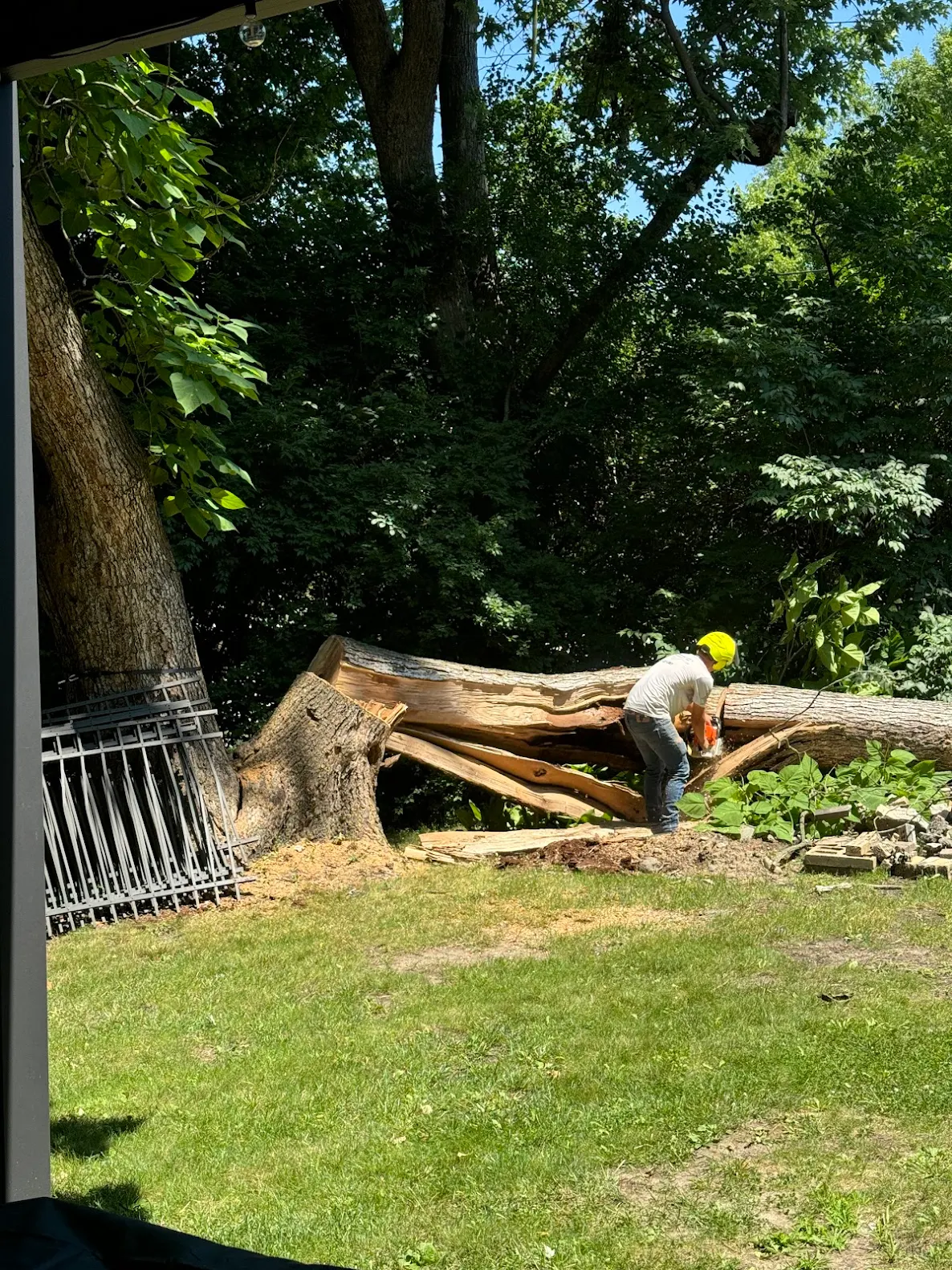
Tree removal after a storm is not a DIY job. Professional crews have the tools, training, and insurance to handle it safely.
Why Professional Tree Removal Matters
Fallen trees are heavy, unstable, and unpredictable. Improper removal can cause injuries or further damage.
A professional tree service provides:
- Safe cutting and removal
- Proper equipment for large trees
- Protection for nearby structures
- Fast response during emergencies
Choosing an experienced, insured company helps reduce stress and ensures the job is done right.
FAQ Section
Who is responsible for removing a fallen tree?
Usually the property owner where the tree or debris lands is responsible, unless negligence can be proven.
If a neighbor’s tree falls on my property, who pays?
If the tree was healthy and fell due to weather, you usually pay for removal on your property. Negligence can change this.
Does homeowners insurance cover fallen tree removal?
Insurance often covers damage and limited removal, but not all cleanup costs. Coverage depends on your policy.
Who removes a fallen tree on a public road?
The city or local government is typically responsible for trees on public property.
Can I be held liable if my tree falls?
Yes, if you ignored a known hazard or failed to maintain a dangerous tree.
Conclusion
So, who is responsible for fallen tree removal? In most cases, responsibility depends on where the tree landed and whether negligence played a role. Storms and natural events usually mean each property owner handles their own cleanup. Unsafe or neglected trees can shift liability.
If a tree has fallen on your property or you are worried about one that could, professional help makes all the difference.
If you need safe, reliable fallen tree removal or emergency tree services, contact American Made Tree Services today. Our experienced team is ready to help protect your property and restore peace of mind as soon as you schedule a service.